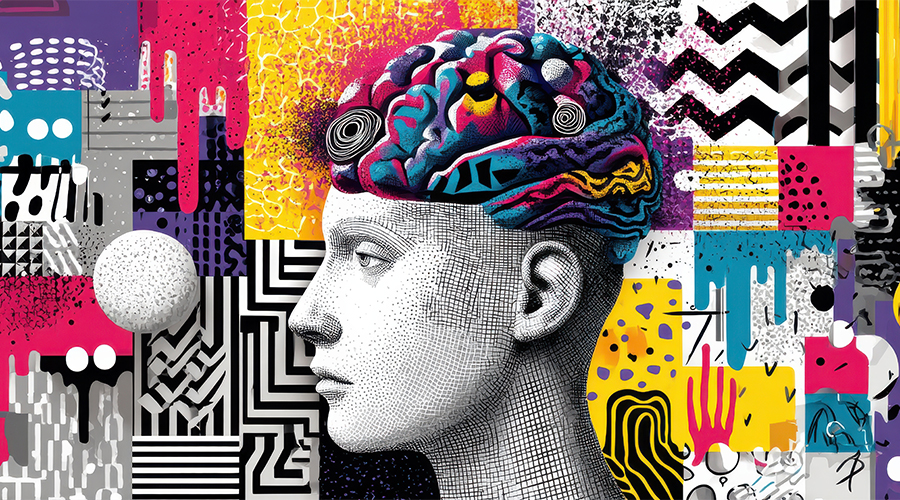
Hobbies are a breeding ground for creativity. They encourage thinking outside the box and exploring new ideas. Whether it’s crafting, playing a musical instrument, or photography, hobbies allow individuals to experiment and express themselves in unique ways.
The creativity fostered by hobbies can also spill over into other areas of life, including work. For example, someone who paints as a hobby may develop better problem-solving skills at work due to their ability to view challenges from different perspectives.
Level up your problem-solving game! Hiring managers love to see if you can find creative solutions, so brush up with this video to help you tackle any problem with confidenceCreative problem-solving helps businesses bring innovative solutions to their customers. It also helps identify unique opportunities for growth in competitive industries. As a skill, creative problem-solving makes you more valuable to prospective organizations.In this article, we’ll discuss what creative problem-solving is and how to demonstrate it in an interview.
Your personal AI career coach is on the app
Find and apply to jobs 7x faster with Career Scout, only available on the app
Source: Indeed Data, US, based on median, compared to job seekers who use mobile app
What is creative problem-solving?
Creative problem-solving is an approach that identifies unique solutions to issues through a process of problem identification and resolution planning. It goes beyond conventional approaches to find solutions to workflow problems, product innovation or brand positioning. Developing the skill of creative problem-solving requires constant improvement to encourage an environment of consistent innovation. Creative problem-solving is considered a soft skill, or personal strength. In an interview, you may be asked to give examples of times you’ve demonstrated this ability. Employers ask this question to understand your thought process, learn how you address challenging situations and clarify how you can bring value to their organization.
How to improve your creative problem-solving skills
Creative problem-solving involves analyzing an issue, defining an approach and implementing a solution. Just like any other skill, it requires a strategic approach and practice to get better. Follow these steps to start improving your creative problem-solving skills.
1. Use a strategic framework
Creative problem-solving is a framework within itself. It lets you break down issues that are hard to measure with a structured approach.Try these steps:
- Gather information: During this phase, clarify your goal or your problem. Gather as much information and unbiased input as you can. Customer surveys, employee comments and research data are great sources.
- Identify relationships: Consider all the data you’ve collected and look for relationships between each point. You might find that your problem or goal has changed. This is where you can use creative brainstorming or mind mapping to challenge the parameters of the problems and current solutions. Ask why ‘X’ activities led to ‘Y’ results.
- Develop a solution: Create several hypotheses to solve your problem. Determine which of the solutions will have the best results, which can be fully implemented and how you can implement them. Experiment with different scenarios using A/B testing.
- Implement: Use the information you gathered during your solution phase and put it into action. Evaluate your results and, depending on the outcome, repeat the steps. Using the creative problem-solving method in this way may reveal that there are multiple solutions to a problem.
2. Practice empathy
Empathy is the ability to see the perspective of others. It’s a key element of emotional intelligence. In the workplace, it allows you to understand the viewpoint of coworkers and customers. High emotional intelligence is also an important step in becoming a great leader. Use empathy to implement solutions that will add value to others and the organization.
3. Get a hobby
A hobby presents its own set of challenges that require you to use your brain differently. Because creativity is a translatable skill, you’ll benefit from problem-solving activities while having a positive outlet for stress. Exploring something new also allows you to test the boundaries of what you’re capable of. A hobby is a constructive way to take creative risks.Example:A hobby of building scale models is challenging enough to exercise your brain but your enjoyment of it allows you to relax and provides relief from work stress.
4. Relax your assumptions
The more you see something, the more easily your brain points it out to you. This may lead you to want to solve problems in the same manner you always do. Recognize this tendency when you need unique solutions or innovations. Key details and information get left out when you make an assumption based on past knowledge or how things have always worked. Overcome this tendency by clarifying the assumptions of others, responding appropriately and defining goal expectations. Example:Customers have changing tastes. To boost leads, find out what services bring them the most value, where they spend their time and how to best communicate with them. This data is most helpful before implementing marketing campaigns.
5. Practice persistence
Persistence toward a goal requires maintaining a level of strategic focus through challenging situations until you come to a resolution. Some problems take longer than others to solve.Maybe the information isn’t readily available, the technology isn’t currently advanced enough or you haven’t identified the right connections. Having a reason why your challenge or issue needs solving is a great motivator to persevere through obstacles that arise. Practice persistence by minimizing the time between recognition of a problem and the actions you take. Some goals require consistent, daily action performed for long blocks of time per day. Show persistence by seeking information or resources and trying different solutions until you find what works.Example: An entrepreneur discovers that her current marketing tactics aren’t working. After a couple of years of trying different business ideas, she learns search engine optimization tactics and starts creating digital content for small businesses. Every morning she sets aside time to work on her business and find new clients until it provides a full-time wage.
6. Question standard practices
Collaborating is a great way to come up with creative solutions. It is also a great way to identify obvious solutions that others in your organization may not have tried. If your coworkers or industry is leaning toward one way of doing things, consider if this solution is the best way and try to discuss alternate solutions.
7. Consider your past experiences
Your past is full of accumulated experiences and skills learned in various ways. Use your personal history to give you an understanding of when to persist and when to change focus. This is different from leaning on past assumptions.Past experiences give you a unique perspective that you can apply with critical thought. Ask yourself if you’ve ever been in a situation similar to one you may be currently experiencing in your workplace, recall how the situation ended and determine what you can do to achieve similar or better results.Example: A personal development coach meets weekly with a group of people he is helping. This is his first experience coaching a group. From past experiences with individual clients, he’s learned that people need responsibility to maintain motivation and feel connected. The coach brings this idea to the new group and assigns everyone a role according to their strengths that will help them all succeed.
8. Become an expert in your field
Sometimes you simply need more skills to be more creative. The more you understand the technical side of your industry, the easier it will be to clarify problems, identify connections and develop solutions. Exposure to more scenarios also gives you the foresight to identify issues before they arise.